Brainstem Evoked Response Audiometry (BERA)
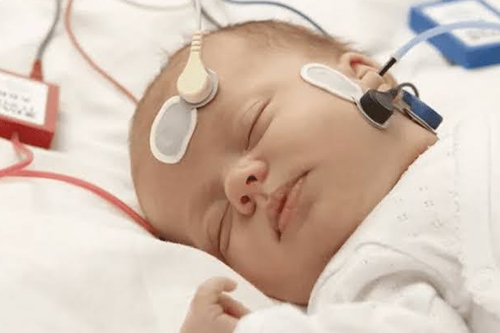
Brainstem Evoked Response Audiometry (BERA), also known as Auditory Brainstem Response (ABR), is a specialized hearing test that measures the electrical responses generated by the auditory nerve and brainstem pathways in response to sound. It is particularly useful when a conventional hearing test cannot provide reliable results.
Dr. Prakhar Kumar may recommend BERA for children, infants, or adults when detailed assessment of hearing and the auditory pathway is required. The test can help estimate hearing sensitivity and evaluate how sound signals travel from the ear to the brainstem. Book a consultation.
Conditions
BERA may be recommended when hearing assessment is difficult through conventional methods or when evaluation of the auditory pathway is clinically required.
- Suspected hearing loss in infants and children
- Hearing assessment in children who cannot respond reliably to standard tests
- Speech and language delay associated with possible hearing loss
- Suspected congenital hearing loss
- Unexplained hearing difficulties
- Assessment of the auditory nerve and brainstem pathways
- Hearing evaluation when behavioral audiometry is unreliable
- Selected cases requiring detailed objective hearing assessment
Symptoms
BERA may be advised when there are concerns about hearing, speech development, or the ability to respond consistently to sounds.
- Does not respond consistently to sounds
- Does not respond when called by name
- Delayed speech or language development
- Difficulty understanding spoken instructions
- Suspected hearing loss
- Difficulty participating in conventional hearing tests
- Unclear or delayed speech associated with hearing concerns
- Persistent or unexplained changes in hearing
Causes
Hearing difficulties that require BERA evaluation may be related to conditions affecting the outer, middle, or inner ear, auditory nerve, or hearing pathways.
- Congenital hearing conditions
- Genetic causes of hearing loss
- Recurrent or chronic ear infections
- Middle ear fluid or other ear conditions
- Inner ear disorders
- Conditions affecting the auditory nerve
- Infections or conditions affecting hearing pathways
- Other causes of hearing impairment requiring objective assessment
Treatment
BERA is a diagnostic test rather than a treatment. Its results help determine hearing sensitivity and guide further management according to the underlying cause.
- Detailed ENT consultation and ear examination
- Assessment of the child's or patient's hearing concerns
- BERA testing to record auditory brainstem responses
- Estimation of hearing thresholds when appropriate
- Assessment of auditory nerve and brainstem responses
- Additional hearing tests when clinically indicated
- Management of identified ear or hearing conditions
- Referral for hearing rehabilitation or further specialist care when required
Benefits
BERA provides an objective assessment of auditory pathway responses and can be especially useful when reliable behavioral hearing responses are difficult to obtain.
- Provides an objective assessment of hearing responses
- Useful for infants and young children
- Helps estimate hearing sensitivity
- Assesses responses along the auditory pathway
- Useful when conventional hearing tests are unreliable
- Supports evaluation of suspected hearing loss
- Helps guide further hearing management
- Supports early identification of hearing difficulties in appropriate cases
Prevention
Not all hearing problems can be prevented, but protecting hearing and addressing ear-related conditions early can support healthy auditory development and function.
- Protect children from excessive noise exposure
- Attend recommended newborn and childhood hearing screenings
- Treat recurrent ear infections promptly
- Avoid inserting objects into the ears
- Monitor speech and language development
- Seek evaluation if a child does not respond normally to sounds
- Follow recommended hearing assessments
- Seek ENT evaluation for unexplained or progressive hearing changes